The band, the vitola, and the strength rating are three languages of the same ritual. Read them well and you navigate the catalog faster with fewer random buys. This guide explains format, ring gauge, strength, and why a pretty band is not a flavor guarantee.
What a vitola is
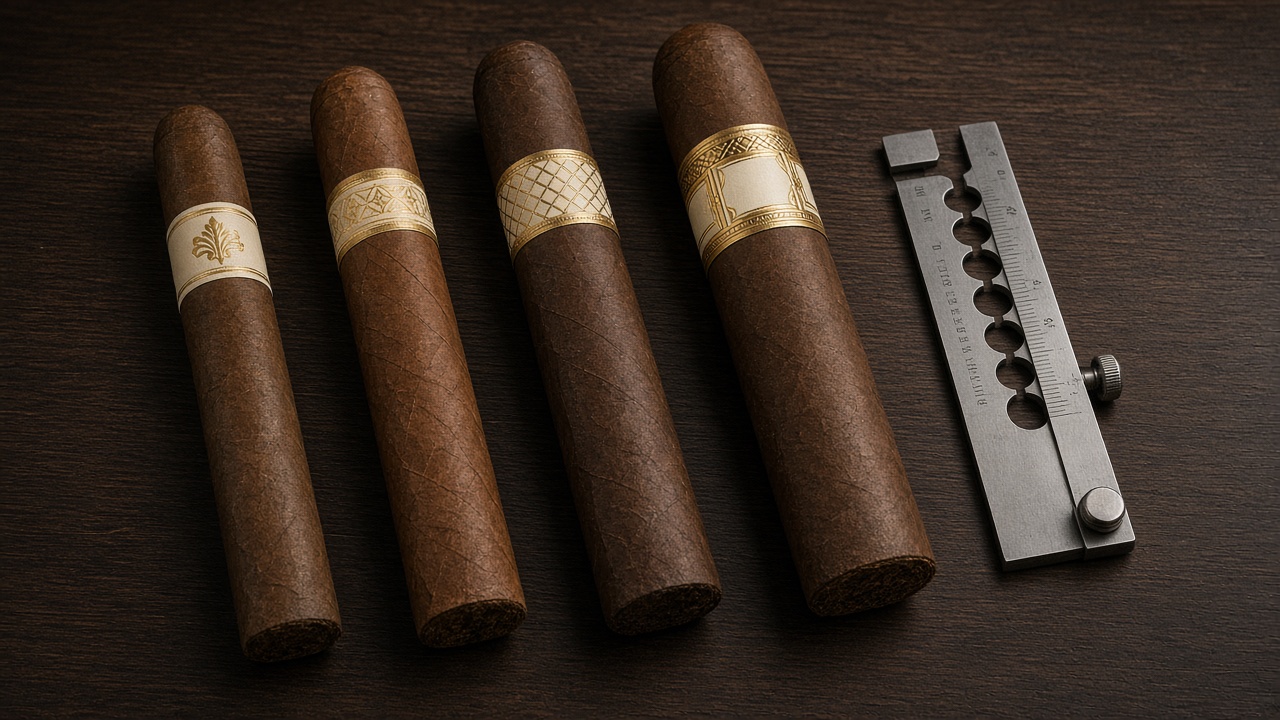
Vitola is a standardized size: length (often in inches) and diameter in ring gauge (1/64 inch). Robusto, Toro, Corona, Churchill, Belicoso are convenient labels, but numbers are clearer. Two “toro” sticks from different factories can differ slightly.
How size changes the session
- longer cigar — more flavor acts, more time;
- thicker — cooler smoke, wider palette, slower pace;
- thinner — faster heat-up, brighter sharpness at the start.
Strength: mild → full
Strength describes nicotine and body feel, not quality. A mild cigar can be more complex than a blunt full. On Royal Smoke cards look for mild, medium, medium-full, full. After a meal, medium is often more comfortable; for a short pause, a mild corona.
The band: what it tells — and what it does not
The band identifies line and maker, sometimes a year or limited edition. It does not guarantee you will love the smoke. Pretty gold on a band does not replace wrapper/filler notes. Remove the band once adhesive softens — often after the first third — if you remove it at all.
How to build a catalog query
Name three parameters: strength + vitola + flavor mood (nut/wood vs coffee/cocoa/spice). Open filters in the cigar catalog, compare two or three cards, check smoking time. Need a hand? Contact us.
Example card readings
“Robusto, medium, Nicaraguan wrapper, cocoa and pepper” means about an hour, denser smoke, possible spice on the finish. “Corona, mild, Dominican leaf, nut and cream” is a shorter, softer daytime pause.
Link to storage and accessories
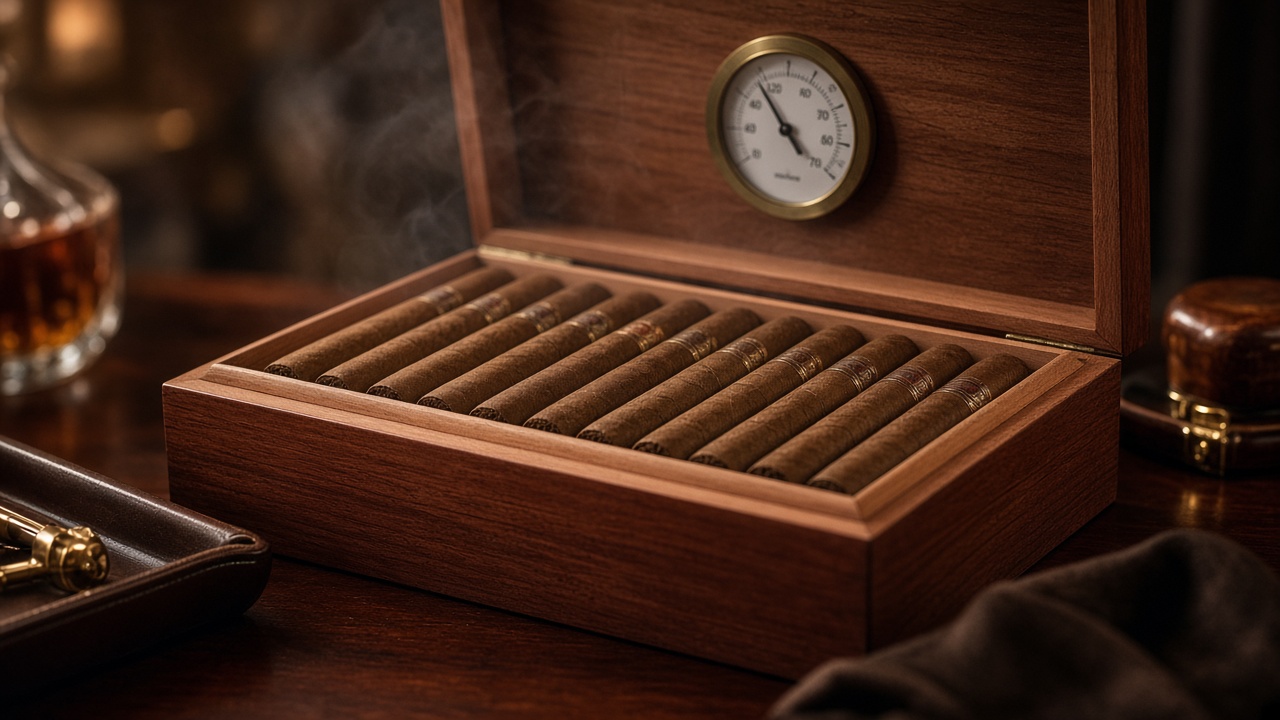
Thick vitolas forgive dry climate less — wrappers crack sooner. Thin ones overheat faster under an aggressive torch. So reading format pairs with our humidor and accessories guides.
Short checklist before purchase
- Strength matches time of day and experience.
- Vitola fits your free interval.
- Tasting notes are specific, not only “premium.”
- You have a storage plan if you will not smoke today.
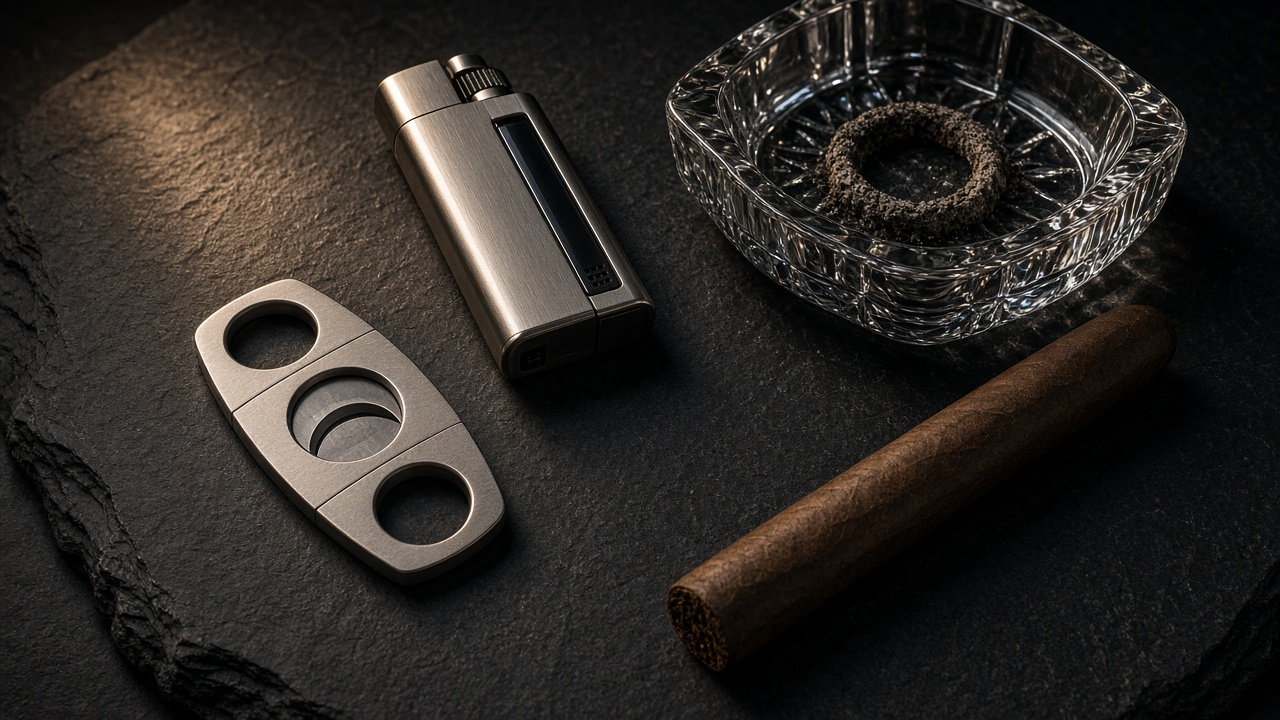
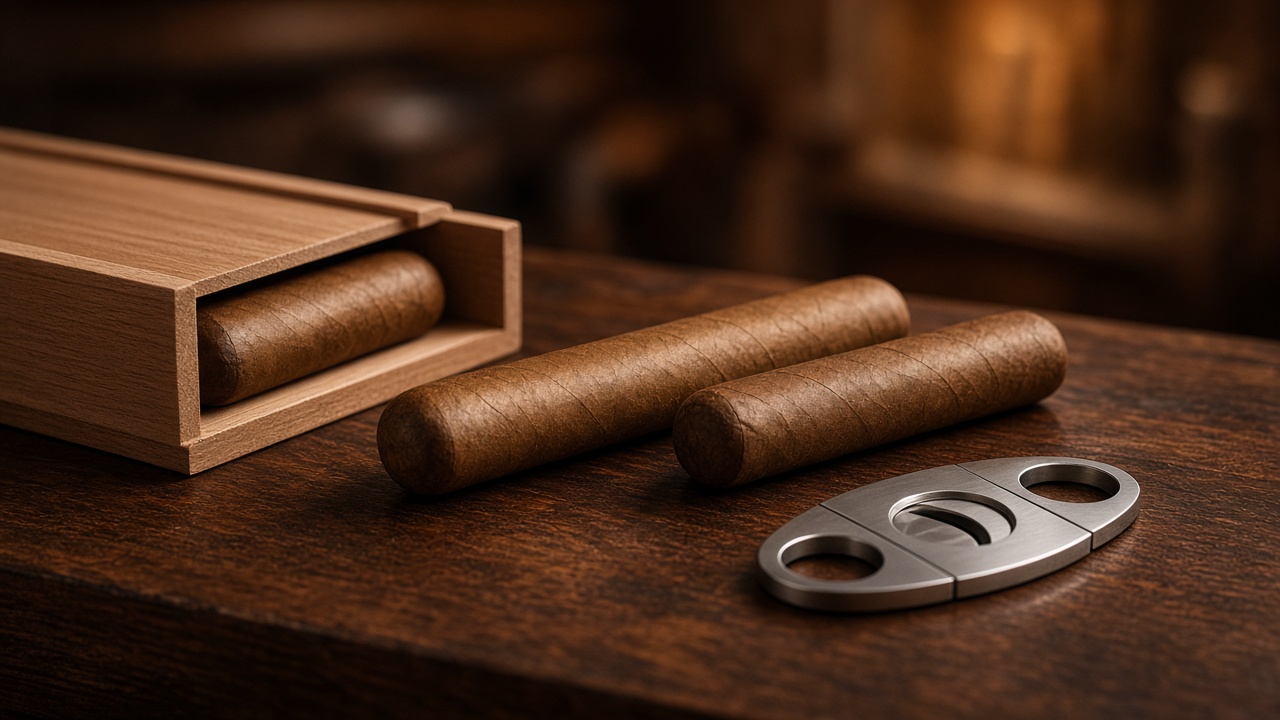
- Your cutter fits the ring gauge.
When these five align, the band becomes a nice detail — the decision is already made with head and palate.
Common catalog formats
Corona is usually shorter and thinner — convenient for 30–45 minutes. Robusto holds about an hour. Toro and Churchill give a longer narrative. Belicoso with a figured head requires a more careful cut. Do not chase the “biggest” cigar for status: an unsmoked third is not savings but a lost profile and irritation.
Look not only at the format name but also at the numbers in the specification. Manufacturers sometimes use marketing names. That is why at Royal Smoke we duplicate the length and ring gauge in a plain form.
Strength and time of day
In the morning or on an empty stomach, full strength often causes dizziness even in experienced smokers. After a substantial dinner, medium or medium-full opens more softly. If you plan a two-hour conversation, choose a longer format of medium strength rather than a short full-body “rocket.”
Keep simple notes: date, vitola, strength, three words of taste, a score of 1–5. In a month you will see a pattern — for example, that you consistently enjoy nutty medium robustos and rarely enjoy very spicy thin gauges.
Bands, limited editions, expectations
Limited bands are beautiful for a collection, but flavor is determined by the blend. Buy a limited edition once you already understand the brand’s base style. A beginner is better off with two or three classic lines than with one “rare” item with no reference point. If the band is a collectible, remove it carefully or leave it on until the end so you do not damage the wrapper.
Remember: a band does not protect against dry air. Even the most beautiful label will not replace a humidor. Reading a vitola ends with a decision about storage and a cutting tool — only then does a purchase become a system rather than an accident.
A practical example: comparing two cards
Imagine two items: a medium robusto with cocoa and light pepper notes versus a mild corona with nut and cream. The first asks for a calm evening and water at hand; the second, a short daytime pause. Both can be “right” if you read vitola and strength together, not separately. That is how choosing in the Royal Smoke catalog works: parameters first, then the emotion of the band. When you hesitate between two cards of similar strength, choose the one where the notes and smoking time are described more clearly; abstract epithets like “premium” and “elite” without details are a weak buying signal.
Beginner glossary: five terms
Vitola — size. Ring gauge — diameter. Strength — body feel. Wrapper — the outer leaf that strongly shapes the first aroma. Band — the line identifier. If you keep this glossary in mind while browsing the catalog, you will cut out random purchases faster and build a selection around your own time, not someone else’s status. Repeat the terms aloud when choosing — that way your brain links the numbers on the card to the real experience of a session. In a few weeks you will start reading the shelf faster than friends who still choose only “by a pretty band” without looking at strength, vitola, and the stated smoking time in the Royal Smoke catalog.